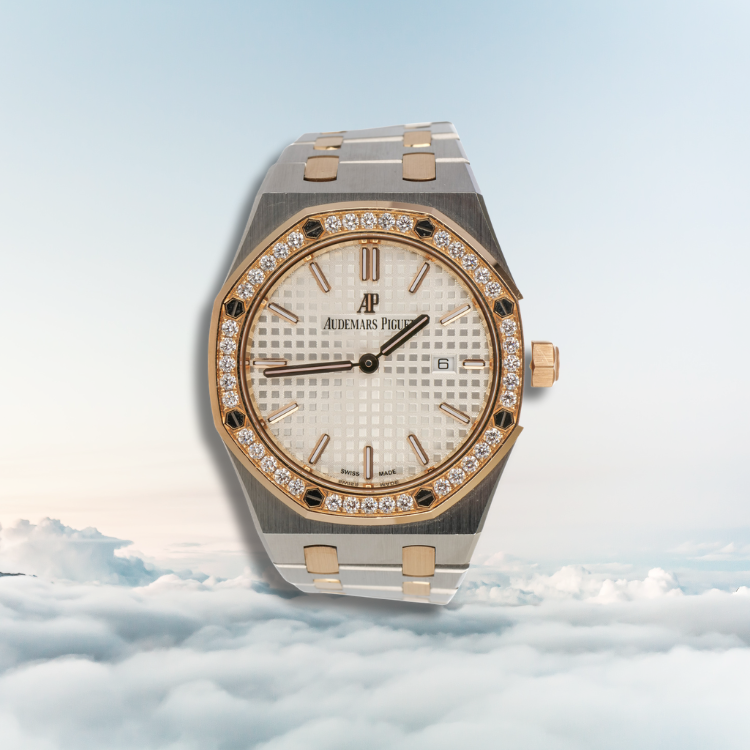
The Royal Oak timepiece was launched by Audemars Piguet in 1972. Designed by Gerald Genta, the watch became the ultimate bridge between timeless style and prestigious sporting prowess, following in the footsteps of the Rolex Professional collection that included the Submariner and other notable models.
However, it is only when you look at the process of bringing the Royal Oak line to life, with its innovative use of new materials and techniques, that you see just how fresh and unique this creation really was.
In this article, we’re looking first at the inspiration behind the Royal Oak and then at the impact of different materials on refining the look and finish of a timepiece that remains one of the most popular on the market.
The Royal Oak was first inspired by the call for a luxury sports watch that was made using steel. This demand came from an Italian distributor who approached the Managing Director of the Audemars Piguet brand, expressing the requests he was hearing from customers.
Gerald Genta was brought in by the brand to design something fresh, with the designer subsequently claiming that the entire design was completed in a single night. Known for his work with other brands, including Patek Philippe, it’s no wonder Gerald Genta was chosen to bring the new Audemars Piguet centrepiece to life.
And the results were nothing short of revolutionary: not only in their reliance on previously unused materials, but also in the shape and structure of the watch. The octagonal watch face boasted visible screws and a porthole-inspired design, with the screws designed to emanate the finish of a diving helmet.
A sports watch at its heart, this watch was designed with function front of mind – without overlooking the need for a timeless and versatile aesthetic.
And so, the Royal Oak was launched to the market, considered by Audemars Piguet to be a new spin on a saturated market. But the initial reception was muted – with the Royal Oak only really being picked up and made popular by elite circles and those who saw its potential and were pictured out and about with their own Royal Oak timepiece. You could say they were like early influencers, changing the minds of the masses over time.
The rest really is history. New materials have been adopted across the Royal Oak collection by the brand, as have different design traits, features, and intricacies. But the fact remains that the Royal Oak is a highly coveted and in-demand timepiece that has only grown in popularity over the decades since its release.
The use of stainless steel undoubtedly challenged the norms of the horological industry and is in no small part responsible for the attention that the Royal Oak earned on the market. By stepping towards the use of a more rustic and less refined material, Audemars Piguet managed to make this new collection accessible and attractive to a new kind of buyer.
But that’s not to say there isn’t still a place on the market for precious metals, as seen in the development of the Royal Oak line over time.
By the late 1970s, Audemars Piguet had moved its iconic new model into the precious materials market, creating Royal Oak pieces using gold, titanium, and two-tone metals. The impact and importance of this move, again, cannot be overlooked – as it took a watch that attracted a new audience and brought it back to a place where Audemars Piguet already exists.
The stretch towards more traditional golds and refined metals ensured that the Royal Oak and its variety of models all appealed to that luxury audience as well as those seeking a rugged sports watch. It’s this that we credit for the constant demand for Royal Oak pieces, as the brand continues to ensure there is something to suit all preferences and tastes.
With all this in mind, what is it that makes the Royal Oak such a popular and successful luxury watch?
Those who have already purchased new or second-hand goods on the luxury market will recognise one overwhelming trend, which is the lack of supply and endlessly high demand. This ensures there is never enough stock to meet demand, pushing the price of products higher and surrounding every new release with a deep pool of buyers.
The Royal Oak in particular also owes much of its success to the fact that Gerald Genta designed it, and the team behind the continuous production of new models and releases is so famous for its quality. It takes between two and three months to produce a new Royal Oak watch; something which is ever present in the quality and lifespan of each finished piece. These are not watches that you wear for a few years and then discard. Rather, they are generational pieces that you can keep and collect.
And let’s not forget the impact of pop culture and the reason that the Royal Oak became popular in the first place: the influence of the elite.
Modern consumers want to own and wear what their role models wear – and you need only look at the bank of Royal Oak wearers to see who favours the brand and which materials they consider to be the best of the best.
Patrick Dempsey and Jay-Z are notable celebrities who own Royal Oak watches. Usher and Mark Ronson also famously wear their Royal Oak timepieces out and about. These names and their wide following only contribute towards the marketing and visibility of the Royal Oak in all manner of material finishes and iterations.
When you visit a boutique reseller, they will introduce you to different Royal Oak models and support you in comparing the different materials available.
Finding your perfect match balances budget with preference, lifestyle, and the kind of impression you want to make when you walk out of the store with your brand new Audemars Piguet timepiece.